
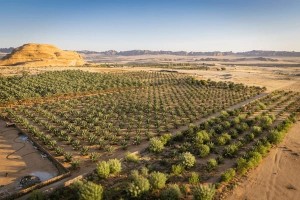
Harvesting the Heat: How Innovation is Securing the Future of Desert Farming
Living in an arid region often feels like a constant negotiation with the sun. When we talk about food security in these dry landscapes, we aren't just talking about having enough supermarkets; we are talking about the fundamental challenge of growing life where the environment seems determined to stop it. For decades, the strategy was to force the land to comply by pumping massive amounts of water from underground aquifers. But as we move through 2026, we have realized that those old methods are no longer sustainable. The water tables are dropping, and the heat is rising, forcing us to rethink what it means to farm in the desert. It is a transition from trying to conquer nature to learning how to dance with it.
One of the most impressive shifts has been the move toward ultra-efficient technology. In the past, much of the water used in desert farming was lost to the air before it even reached the plant’s roots. Today, precision irrigation systems have changed the game. Imagine tiny sensors buried deep in the dirt that act like the brain of the farm. They measure exactly how thirsty a plant is and deliver just a few drops of water at the perfect moment, usually under the cool cover of night. This doesn't just save water; it prevents the soil from becoming too
One of the most impressive shifts has been the move toward ultra-efficient technology. In the past, much of the water used in desert farming was lost to the air before it even reached the plant’s roots. Today, precision irrigation systems have changed the game. Imagine tiny sensors buried deep in the dirt that act like the brain of the farm. They measure exactly how thirsty a plant is and deliver just a few drops of water at the perfect moment, usually under the cool cover of night. This doesn't just save water; it prevents the soil from becoming too salty, which is a major "silent killer" of desert crops. By using these smart systems, farmers are producing more food with a fraction of the resources, proving that we can be both productive and protective of our environment.
However, technology isn't the only answer. There is a beautiful resurgence of ancient wisdom that is proving just as effective as high-tech sensors. In many dryland communities, farmers are returning to traditional methods like building small stone walls to catch runoff or digging specialized pits that trap moisture and organic matter. This approach, often called regenerative agriculture, focuses on healing the soil. By planting native trees alongside food crops, farmers create a natural canopy that lowers the ground temperature and keeps the wind from blowing the fertile topsoil away. It is a reminder that sometimes the most advanced solution is actually thousands of years old. When we combine this historical knowledge with modern science, the results are incredible.
A shining example of this localized progress can be seen at the University of Fujairah. The research happening there is a bridge between academic theory and real-world survival in the UAE’s unique climate. Scholars and students are looking deeply into how we can utilize the resources we already have. This includes studying salt-tolerant plants that can thrive in brackish water and finding ways to optimize the growth of staples like dates and local vegetables. By focusing on the specific challenges of the region, like high humidity paired with extreme heat; the University of Fujairah is helping to create a roadmap for a self-sufficient future. Their work ensures that the next generation of agricultural experts is equipped with the tools to keep the desert green and the food supply stable.
Ultimately, food security in arid regions is about resilience and community. It requires us to be diverse in what we eat and how we grow it. Instead of relying on thirsty crops that don't belong in the desert, there is a growing movement to embrace hardy grains and local varieties that have evolved to survive here. This shift doesn't just make sense for the planet; it makes our food systems much harder to break. As we look forward, the goal is to make sure that every community, no matter how dry their land may be, has the knowledge and the tools to feed itself. Through a mix of smart tech, ancient techniques, and dedicated local research, we are turning the desert into a place of abundance rather than scarcity.